CELIOS Names Bahlil and Pigai the Worst-Performing Ministers, Golkar Responds

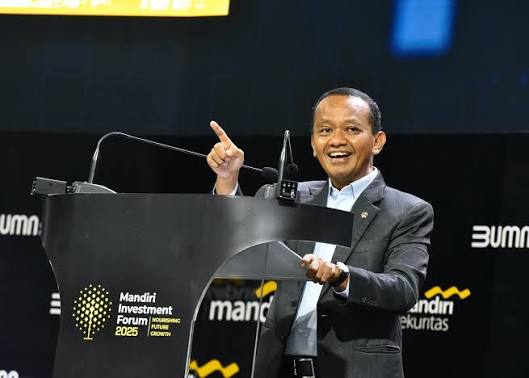
JAKARTA — The performance assessment of ministers in President Prabowo Subianto’s administration released by the Center of Economic and Law Studies (CELIOS) has drawn a response from the Golkar Party. In the report, Energy and Mineral Resources Minister Bahlil Lahadalia and Human Rights Minister Natalius Pigai ranked at the bottom of the cabinet performance assessment.
The survey, conducted from September 15 to October 9, 2026, involved 1,142 respondents, comprising experts and members of the general public.
According to CELIOS’s assessment, Bahlil received a score of minus 159, while Pigai ranked just above him with a score of minus 158.
The methodology combined assessments from the general public using a non-probability sampling approach with data weighting, alongside an expert survey conducted using the snowball sampling method.
Golkar Questions CELIOS Assessment
Golkar Deputy Chairman and Chairman of Commission XII of the House of Representatives (DPR RI), Melchias Mekeng, responded to the assessment by questioning the motives behind the CELIOS survey.
Mekeng suggested that the organization might have a particular agenda concerning Bahlil Lahadalia, who serves as both Golkar’s chairman and Indonesia’s energy and mineral resources minister.
“They may have their own agenda. That does not necessarily mean they could do what Mr. Bahlil has done if they were given the same position. The theories they learned in school do not necessarily translate into practical solutions in real-world conditions,” Mekeng told detikNews on Tuesday (October 13, 2026).
Mekeng also maintained that Bahlil had performed well during his tenure as energy and mineral resources minister. He highlighted several achievements, including keeping subsidized fuel prices from rising and maintaining national energy supplies.
According to Mekeng, Bahlil has also sought to prevent monopolistic practices among mineral and coal businesses while encouraging greater participation by local entrepreneurs in the sector.
He added that Bahlil had taken action against business operators whose practices were considered improper.
Mekeng also pointed to the government’s efforts to maintain fuel supplies amid geopolitical developments, including conflicts affecting the Strait of Hormuz region.
In its report, The Two-Year Performance Report of the Prabowo–Gibran Administration, CELIOS ranked ministerial performance by combining assessments from two respondent groups: members of the general public and experts.
The results placed Bahlil at the bottom of the ranking with a score of minus 159, followed by Pigai with minus 158. The findings represent CELIOS’s survey results and do not constitute an official government evaluation of ministerial performance.


