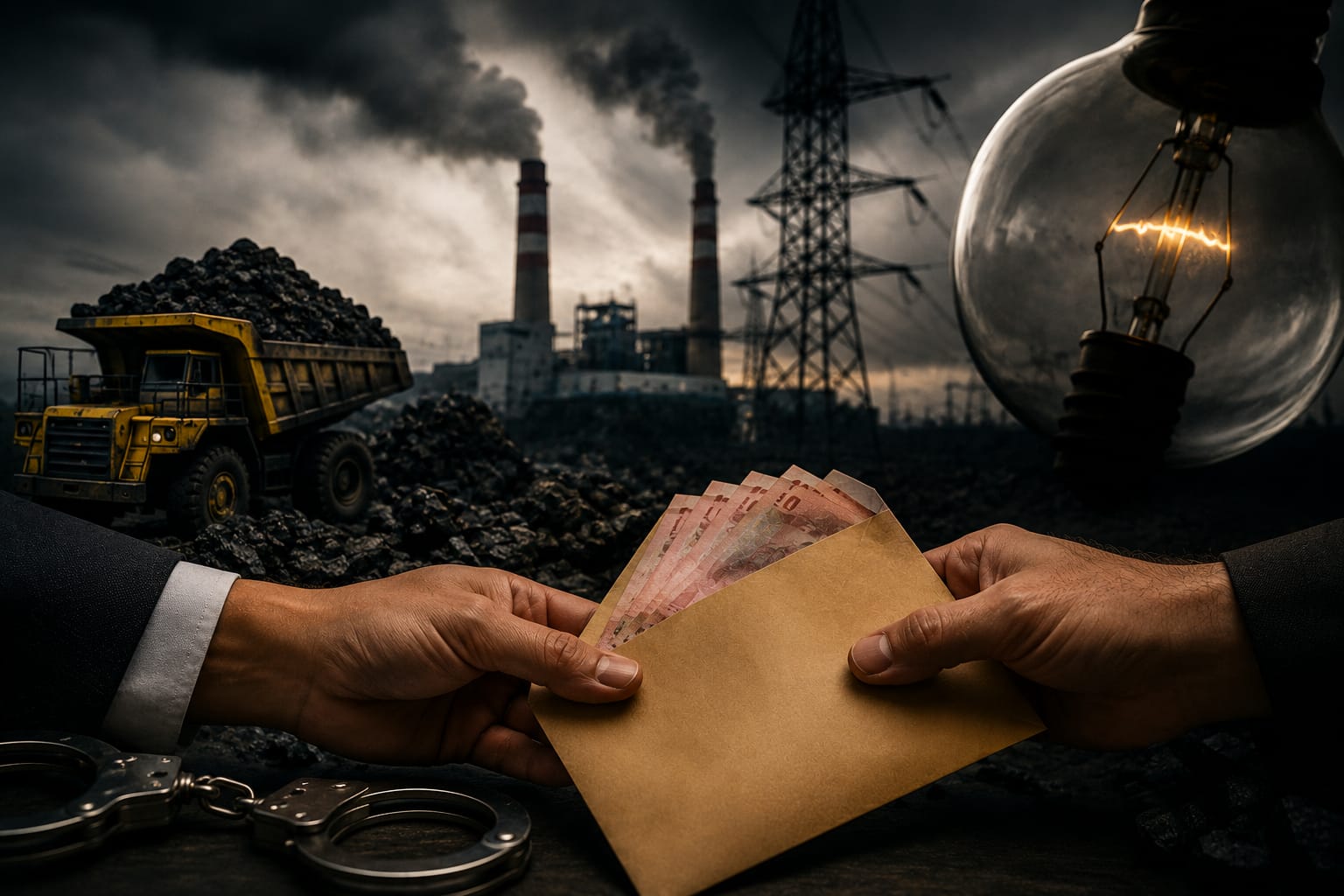
The alleged corruption in coal procurement for several coal-fired power plants (PLTUs), reportedly taking place since 2018, should serve as a serious wake-up call for the government. Investigators have uncovered indications of document manipulation, discrepancies in coal quality and quantity, as well as alleged price manipulation, with estimated state losses reaching around Rp5 trillion. This is no longer merely about public funds being siphoned away—it reflects the fragility of oversight in one of the country’s most strategic sectors.
Coal is not just another commodity. It remains the backbone of Indonesia’s electricity supply. Any irregularity in its procurement not only harms state finances but also has the potential to reduce power plant efficiency and ultimately place a burden on millions of people who rely on a stable electricity supply.
Furthermore, investigators suspect that the alleged corruption may have been linked to operational disruptions at power plants that resulted in a major blackout. This allegation must, of course, be tested through due legal process and proven in court. However, if such a connection is ultimately established, the consequences would extend far beyond financial losses. Corruption in the energy sector would not merely drain public funds—it could also disrupt essential public services and economic activities that depend on a reliable electricity system.
What is even more alarming is that these alleged practices are believed to have continued for years. It is difficult to imagine manipulation involving documentation, coal quality, quantities, and payments persisting for such a long period without significant weaknesses in oversight. The fundamental question is no longer just who was involved, but why the system allowed it to continue for so long.
This case should become a turning point for a comprehensive review of governance in the energy sector, particularly within state-owned enterprises. Internal audits should not be limited to paperwork. Oversight must include on-site verification, supply chain traceability, and independent quality inspections. If the same loopholes remain, similar cases are only a matter of time.
Law enforcement must also proceed without fear or favor. The public has the right to know who is accountable once sufficient evidence has been established. At the same time, all legal proceedings must fully respect the presumption of innocence. Transparency throughout the investigation will be essential to restoring public trust in the management of state assets.
The government has repeatedly pledged to strengthen the governance of state-owned enterprises and intensify the fight against corruption. That commitment is now being put to the test. Prosecuting those responsible is only part of the solution. More importantly, the system that allegedly allowed these irregularities to occur must be fundamentally reformed.
The most dangerous form of corruption is not merely the one that drains the state treasury—it is the one that normalizes misconduct and renders oversight ineffective. If left unchecked, the greatest loss will not simply be trillions of rupiah, but the erosion of public trust in the institutions entrusted with safeguarding the nation’s interests.