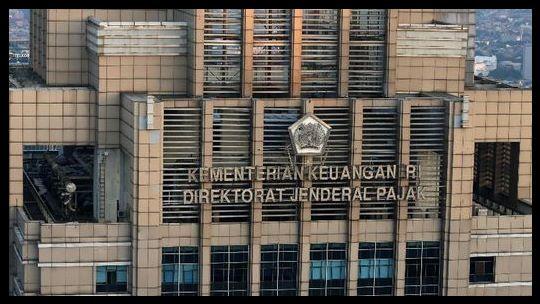
Jakarta – Indonesia’s Directorate General of Taxes (DJP) under the Ministry of Finance has uncovered several patterns of tax non-compliance among companies in the iron and steel sector. As of August 26, 2026, a total of 38 taxpayers in the sector had entered various stages of investigation and enforcement by the tax authority.
The action follows a list of 40 steel companies previously identified by Finance Minister Purbaya Yudhi Sadewa for allegedly failing to meet their tax obligations. Purbaya had estimated that potential lost state revenue from the 40 companies could reach between Rp4 trillion and Rp5 trillion.
Director General of Taxes Bimo Wijayanto said the handling of the cases was not limited to conventional tax audits. The DJP has also employed several measures, including monitoring, data analysis, case building, preliminary evidence examinations, and law enforcement.
“The handling does not only take the form of audits, but also includes monitoring, data analysis, case building, preliminary evidence examinations, and law enforcement in accordance with the risk level and characteristics of each taxpayer,” Bimo said in a statement, as quoted on Wednesday (September 2, 2026).
Schemes Uncovered by the Tax Authority
Based on its analysis and investigations, the DJP identified several patterns allegedly used to reduce or avoid tax obligations.
One of the schemes involved sales that were not properly reported and were not accompanied by the issuance of tax invoices. As a result, the Value Added Tax (VAT) that should have been collected was not properly recorded.
The DJP also found the use of accounts belonging to other parties, or nominee accounts. Such practices can make payment flows less visible in a taxpayer’s accounting records.
Another scheme involved customers making payments directly to suppliers while the taxpayer acted as an intermediary in the transaction. The tax authority also found the issuance or use of tax invoices that were not based on genuine transactions, allegedly to create or claim input VAT credits that were not actually due.
The DJP stressed, however, that the discovery of these patterns does not mean that all companies in the iron and steel sector have violated tax regulations. Each taxpayer is being handled based on the relevant data, facts, and evidence.
Rp825.28 Billion in Tax Revenue Collected
From its handling of the 38 taxpayers, the DJP has collected Rp326.60 billion in tax revenue.
The amount consists of Rp224.19 billion from disclosures of incorrect information during preliminary evidence examinations, Rp96.08 billion through the tax authority’s monitoring function, and Rp6.33 billion through tax audits.
The investigation was subsequently expanded to parties connected to the 38 taxpayers. The DJP traced transaction chains involving suppliers, customers, and other related parties.
Through this expansion, the tax authority handled 485 taxpayers for the 2021-2026 tax years and collected Rp380.50 billion in revenue. In addition, preliminary evidence examinations involving 20 other taxpayers in the iron and steel sector generated Rp118.18 billion.
As a result, revenue generated from the expanded investigation outside the initial 38 taxpayers reached Rp498.68 billion. Combined with the Rp326.60 billion collected from the 38 main taxpayers, total tax revenue generated from the series of enforcement actions in the iron and steel sector reached Rp825.28 billion.
The figure does not yet represent the sector’s entire potential tax revenue. Several taxpayers remain subject to monitoring, audits, further investigation, or law enforcement proceedings.
38 Taxpayers Still Under Investigation
As of August 26, 2026, eight taxpayers were still undergoing preliminary evidence examinations.
Meanwhile, 12 taxpayers had completed the process. Of these, 11 cases were closed after the taxpayers disclosed inaccuracies in accordance with Article 8 Paragraph (3) of the General Taxation Provisions Law (UU KUP), while one taxpayer was proposed to proceed to the investigation stage.
Another 14 taxpayers remained at the case-building stage, while one taxpayer was at the stage of a proposed preliminary evidence examination that had already been approved. Three other taxpayers remained under monitoring.
The DJP also noted that some taxpayers were handled simultaneously through monitoring, auditing, and law enforcement functions for different tax years. Of the 38 taxpayers, 16 had made payments through the monitoring function, while another 13 had made payments through the audit function.
Bimo said the enforcement efforts in the iron and steel sector were not solely aimed at increasing state revenue. They were also intended to establish sustainable tax compliance and ensure fair competition among businesses.
“The principle is that compliant taxpayers must receive service and certainty. Taxpayers who are not yet compliant will be encouraged to improve their compliance. However, if evidence shows violations that meet the elements of a tax crime, the DJP will take firm law enforcement action in accordance with applicable regulations,” Bimo said.
The DJP said it would continue strengthening tax oversight through a data-driven approach. Investigations will not be limited to individual companies but may also be expanded to parties within their transaction chains if links are identified through data, transaction flows, or tax documentation.