Jakarta – PT Freeport Indonesia (PTFI) projects that its gold production will continue to increase, reaching approximately 37 tons by 2030, driven by the operation of new underground mines and the recovery of production capacity in the Grasberg area, Papua. This projection has become one of the indicators that the company’s long-term investments are beginning to bear fruit.
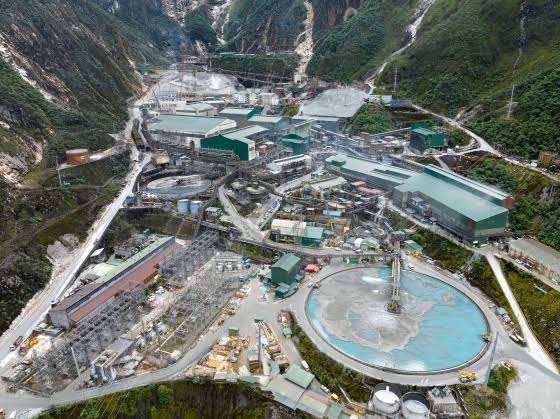
PT Freeport Indonesia President Director Tony Wenas explained that the increase in production is supported by the recovery of operations at Grasberg Block Cave (GBC) and the commencement of production at the Kucing Liar underground mine. Both projects are expected to become the backbone of Freeport’s gold and copper production over the coming decade.
Previously, Freeport’s gold production had declined due to operational disruptions following an incident at its underground mine. However, the company projects that production will gradually increase starting in 2027, reaching approximately 37 tons by 2030.
Not Separated from the Freeport Share Acquisition During the Jokowi Era
The prospect of increased production cannot be separated from the major change that occurred in 2018, when the Indonesian government under President Joko Widodo completed the divestment of PT Freeport Indonesia’s shares.
Through PT Indonesia Asahan Aluminium (Inalum), now part of MIND ID, Indonesia officially increased its ownership in Freeport from around 9.36% to 51.23%. This move made Indonesia the majority shareholder for the first time since the Grasberg mine began operations.
The acquisition initially sparked debate because it required substantial financing. However, the government argued at the time that majority ownership would provide long-term benefits through higher dividends, stronger control over a strategic national asset, and increased state revenue.
With gold production projected to rise again through 2030, potential state revenues—from dividends, taxes, and royalties—are also expected to increase, provided commodity prices remain competitive and production targets are achieved.
Nevertheless, the magnitude of the economic benefits will still depend on several factors, including global gold and copper prices, the success of underground mine development, operational efficiency, and future resource management policies. Increased production does not automatically translate into higher revenues if commodity prices weaken or production costs rise.