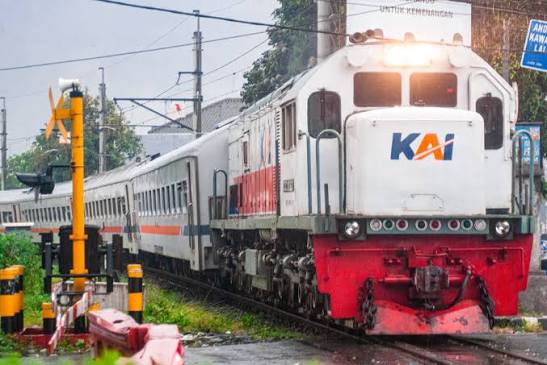
JAKARTA – PT Kereta Api Indonesia (Persero) or KAI posted a sharp decline in profit during the first half of 2026, despite recording higher revenue. The company’s earnings were mainly dragged down by mounting losses from its associated companies and joint ventures, including its investment in the Jakarta–Bandung High-Speed Rail project.
According to KAI Group’s unaudited financial statements, profit before tax for the first half of 2026 stood at Rp842.69 billion, down from Rp1.86 trillion in the same period last year. Meanwhile, net profit fell by approximately 74 percent, declining from Rp1.18 trillion to Rp314.03 billion.
Despite the profit decline, KAI’s core operations continued to grow. The company reported a 6.6 percent year-on-year increase in revenue to Rp17.96 trillion during the first half of 2026. Gross profit rose 18.81 percent to Rp6.79 trillion, while operating profit increased 25.79 percent to Rp4.66 trillion.
KAI Vice President of Corporate Communication Anne Purba said the growth in revenue and operating profit reflected the continued strength of the company’s core business, supported by service improvements, higher productivity, better cost management, and stronger synergies across the KAI Group. She added that the positive operational performance provides a solid foundation for maintaining railway safety, improving service quality, and expanding both passenger and freight transportation services.
However, the company’s bottom line was significantly affected by soaring losses from associated companies and joint ventures. These losses increased from Rp948.20 billion in the first half of 2025 to Rp3 trillion in the same period of 2026.
A major contributor was PT Pilar Sinergi BUMN Indonesia (PSBI), a shareholder of PT Kereta Cepat Indonesia-China (KCIC), the operator of the Jakarta–Bandung High-Speed Rail. PSBI recorded a loss of Rp5.13 trillion, while its total liabilities reached Rp21.54 trillion, slightly exceeding its total assets of Rp21.52 trillion.
Meanwhile, KAI’s balance sheet continued to improve. As of June 30, 2026, KAI Group’s total assets stood at Rp104.79 trillion. Total liabilities declined to Rp65.11 trillion, down from Rp66.14 trillion at the end of 2025, while equity increased to Rp39.69 trillion. The company’s short-term debt also fell from Rp16.20 trillion to Rp15.17 trillion.
Earlier, BPI Danantara Chief Operating Officer Dony Oskaria said the company still needs time to resolve several financial challenges facing KAI, including the impact of its investment in the Jakarta–Bandung High-Speed Rail project, which remains one of the company’s biggest financial burdens.